
One stoic's look at living in the Upper Midwest, mostly about time spent outdoors, dogs, and food.
Showing posts with label food. Show all posts
Showing posts with label food. Show all posts
29 May, 2014
Don't Drown Your Food


27 May, 2014
Agriculture is complicated
and the complication goes beyond "buying organic," shopping local, know your farmer, or any other quaint slogan. The economy is complex and the economics of farming is wrapped up not only in the economics of eating but the biology of the soil and the whole biosphere. Even the most intense and well-informed foodie oversimplifies what goes into sustainable agriculture because no one person can know and understand it all. What we need is an appreciation of how whole systems, including those who are responding to very different incentives, must be engaged in that change. Perhaps that is starting to happen.
and later...
Standing in Klaas’s fields, I saw how single-minded I had been. Yes, I was creating a market for local emmer wheat, but I wasn’t doing anything to support the recipe behind it. Championing Klaas’s wheat and only his wheat was tantamount to treating his farm like a grocery store. I was cherry-picking what I most wanted for my menu without supporting the whole farm. I am not the only one.
In celebrating the All-Stars of the farmers’ market — asparagus, heirloom tomatoes, emmer wheat — farm-to-table advocates are often guilty of ignoring a whole class of humbler crops that are required to produce the most delicious food.
and later...
It’s one thing for chefs to advocate cooking with the whole farm; it’s another thing to make these uncelebrated crops staples in ordinary kitchens. Bridging that divide will require a new network of regional processors and distributors.
Take beer, for example. The explosion in local microbreweries has meant a demand for local barley malt. A new malting facility near Klaas’s farm recently opened in response. He now earns 30 percent more selling barley for malt than he did selling it for animal feed. For other farmers, it’s a convincing incentive to diversify their grain crops.
I'd drink to that.Investing in the right infrastructure means the difference between a farmer’s growing crops for cows or for cafeterias. It will take the shape of more local mills (for grains), canneries (for beans) and processors (for greens). As heretical as this may sound, farm-to-table needs to embrace a few more middlemen.
15 May, 2014
Food Fundamentalism: Fats, Salts, and Sugar
Part One
When is science not science? When it becomes a belief system adhered to and propagated by fundamentalists..
Why were Americans sold a basket of bad science? For their own good.
Why did they buy it? They were made afraid.
Facing bad science reporting on the impact of marijuana, even that bastion of left-of-center conventional wisdom National Public Radio seems to be confirm what members of the conservative rabble have suggested for decades, when science becomes news facts suffer.
Why do dedicated scientists not push back against inaccurate science reporting? Reporters, or more accurately their editors, are not in the business of publishing scholarly papers but of selling newspapers. If you've clicked on a sensational link to regret it later, you know exactly what I mean.
Moreover bad science, once it gains a threshold of public support, becomes funded science. If you are looking to run an experiment, someone has to pay for work to be done and it is easier to get money for a familiar idea.
Like the people who fund them, scientists are homo sapiens and as such are social creatures who work for organizations, made up of other social creatures. Odds are those organizations, their employers whether corporate or public, are just as political as your employer. Consequently scientists too tow the line, for the most part believing something is true because the preponderance of their peers believe it is true and "who am I" to question the consensus.
The few who are anti-social enough to serve as gadflies are marginalized as "deniers." They are betraying the received wisdom and must be punished. We are a religious species whether that religion was handed down by Moses or Moses or Einstein. Today we just drive them out of academia, a small improvement from the days when the citizens of Athens sentenced Socrates to drink Hemlock for corrupting the youth.
Max Plank wasn't too far from the truth when he wrote,
The renewal that comes by the process of death and rebirth is starting to be shown in the area of nutritional research. More scientists are starting to openly admit, and newspapers are starting to publish, how little we know about the impact of diet on health. Admitting what we do not know is the first step in learning something new.
First there were the links made between saturated fat and heart disease in the 1950's and the promised salvation that would arise from eating more carbohydrates. Now we learn of the costs of that advice not only impacted the rise of obesity and diabetes (as critics at the time predicted) but *perhaps* also the increase in cancer, Alzheimer's, and yes in some populations, even heart disease rates that we have seen since that time.
Sevareid's Law rules supreme.
Later came the advice against consuming salt, even after strenuous exercise. It is slowly being replaced by the knowledge that after decades of study the most we can say authoritatively is that the evidence is "inconsistent and contradictory." Consuming the amount of salt recommended by the USDA and CDC may even reduce your life expectancy. We do not know and it is time to admit we do not know.
Likewise there is evidence that we should blame sugar, at least in part and for some, of the modern conditions that ail us. This is just another hypothesis. I do not mean that it should be treated as anything more than an alternative hypothesis, It has not, however, resulted in the same policy attention as saturated fat and salt and caution against excess is at least as warrented in this final catagory of food stuff as the other two.
Hypothesis is often sold as fact. Reason for caution is amplified to reason for fear. Who wants to be the scientist who proposed a hypothesis? Who wants to buy a newspaper that reads like a failing science magazine? We all want to be the guy or gal who made a break through. We all respond impulsively to fear. Just because someone believes in himself, however, does not mean we all should. Just because the news anchor responds with dramatic fear, this is not reason enough that we should be afraid.
What do we know about nutrition? Humans have been eating minimally processed foods since the invention of fire and farmed foods for around 12,000 years. These diets contained meat and the primary oil was either animal lard or, in certain climates, olives. The historical record for the impact of mass consumption of vegetable oils is less than one hundred years. In fact it is the biggest change in our modern diet, and we made the change in the name of a settled science fact that was mere hypothesis.
The puritanical mind, however, rationalized the change "for our own good." From the Inquisition to Mao, true believers always do what they do for the good of the people.
Moderation in all things is still good advice as is the axiom "the dose makes the poison." I'm sure there are points where an individual consumes either too much or too little salt, fat, sugar, or anything else. We can probably even make broad guidelines for the population as a whole, recognizing differences in age, activity level, as well as genetic inheritance. Guidelines, however, are not the same thing as the puritanical scolding which passes for our current attitude. There is such a thing as quality of life for which we as individuals should be allowed to make trade offs.
Informing those individual decisions we should rely on what we really know about the present as opposed to what some policymakers fear or believe. We elect government officials to lead and hire bureaucrats to implement and inform. Neither has been charged to be my caretaker or nanny. Those who would shortcut debate for the sake of their definition of "the common good" are the worse kind of meddler. When you give a puritan power, you will find yourself living in a theocracy which is an oppression to all but the most fanatical of believers.
Luckily, this form of fundamentalism is loosing power in policy circles even if it retains a strong hold on the popular imagination. Unfortunately, there is another form of food fundamentalism seeking to take its place centered on equally unscientific fears of genetic modification and the flame of religious fervor burns bright and young in it.
When is science not science? When it becomes a belief system adhered to and propagated by fundamentalists..
Why were Americans sold a basket of bad science? For their own good.
Why did they buy it? They were made afraid.
Facing bad science reporting on the impact of marijuana, even that bastion of left-of-center conventional wisdom National Public Radio seems to be confirm what members of the conservative rabble have suggested for decades, when science becomes news facts suffer.
Why do dedicated scientists not push back against inaccurate science reporting? Reporters, or more accurately their editors, are not in the business of publishing scholarly papers but of selling newspapers. If you've clicked on a sensational link to regret it later, you know exactly what I mean.
Moreover bad science, once it gains a threshold of public support, becomes funded science. If you are looking to run an experiment, someone has to pay for work to be done and it is easier to get money for a familiar idea.
Like the people who fund them, scientists are homo sapiens and as such are social creatures who work for organizations, made up of other social creatures. Odds are those organizations, their employers whether corporate or public, are just as political as your employer. Consequently scientists too tow the line, for the most part believing something is true because the preponderance of their peers believe it is true and "who am I" to question the consensus.
The few who are anti-social enough to serve as gadflies are marginalized as "deniers." They are betraying the received wisdom and must be punished. We are a religious species whether that religion was handed down by Moses or Moses or Einstein. Today we just drive them out of academia, a small improvement from the days when the citizens of Athens sentenced Socrates to drink Hemlock for corrupting the youth.
Max Plank wasn't too far from the truth when he wrote,
A new scientific truth does not triumph by convincing its opponents and making them see the light, but rather its opponents eventually die, and a new generation grows up that is familiar with it.
The renewal that comes by the process of death and rebirth is starting to be shown in the area of nutritional research. More scientists are starting to openly admit, and newspapers are starting to publish, how little we know about the impact of diet on health. Admitting what we do not know is the first step in learning something new.
First there were the links made between saturated fat and heart disease in the 1950's and the promised salvation that would arise from eating more carbohydrates. Now we learn of the costs of that advice not only impacted the rise of obesity and diabetes (as critics at the time predicted) but *perhaps* also the increase in cancer, Alzheimer's, and yes in some populations, even heart disease rates that we have seen since that time.
Sevareid's Law rules supreme.
Later came the advice against consuming salt, even after strenuous exercise. It is slowly being replaced by the knowledge that after decades of study the most we can say authoritatively is that the evidence is "inconsistent and contradictory." Consuming the amount of salt recommended by the USDA and CDC may even reduce your life expectancy. We do not know and it is time to admit we do not know.
Likewise there is evidence that we should blame sugar, at least in part and for some, of the modern conditions that ail us. This is just another hypothesis. I do not mean that it should be treated as anything more than an alternative hypothesis, It has not, however, resulted in the same policy attention as saturated fat and salt and caution against excess is at least as warrented in this final catagory of food stuff as the other two.
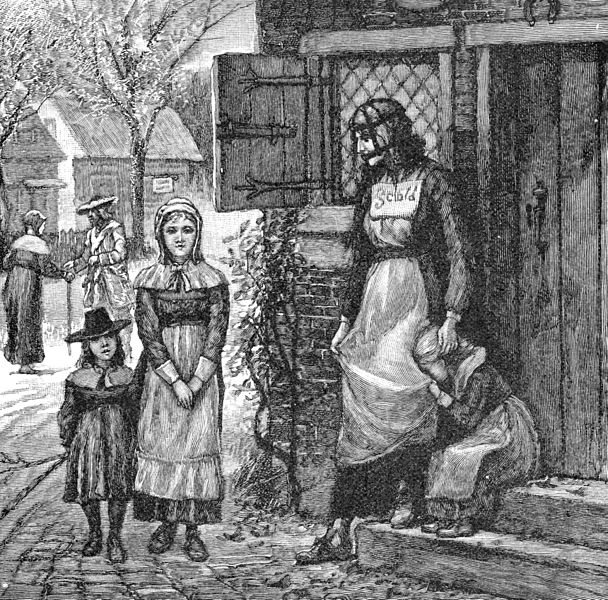 |
| The rationale and content changes but Puritanism never dies. |
Hypothesis is often sold as fact. Reason for caution is amplified to reason for fear. Who wants to be the scientist who proposed a hypothesis? Who wants to buy a newspaper that reads like a failing science magazine? We all want to be the guy or gal who made a break through. We all respond impulsively to fear. Just because someone believes in himself, however, does not mean we all should. Just because the news anchor responds with dramatic fear, this is not reason enough that we should be afraid.
What do we know about nutrition? Humans have been eating minimally processed foods since the invention of fire and farmed foods for around 12,000 years. These diets contained meat and the primary oil was either animal lard or, in certain climates, olives. The historical record for the impact of mass consumption of vegetable oils is less than one hundred years. In fact it is the biggest change in our modern diet, and we made the change in the name of a settled science fact that was mere hypothesis.
The puritanical mind, however, rationalized the change "for our own good." From the Inquisition to Mao, true believers always do what they do for the good of the people.
Moderation in all things is still good advice as is the axiom "the dose makes the poison." I'm sure there are points where an individual consumes either too much or too little salt, fat, sugar, or anything else. We can probably even make broad guidelines for the population as a whole, recognizing differences in age, activity level, as well as genetic inheritance. Guidelines, however, are not the same thing as the puritanical scolding which passes for our current attitude. There is such a thing as quality of life for which we as individuals should be allowed to make trade offs.
Informing those individual decisions we should rely on what we really know about the present as opposed to what some policymakers fear or believe. We elect government officials to lead and hire bureaucrats to implement and inform. Neither has been charged to be my caretaker or nanny. Those who would shortcut debate for the sake of their definition of "the common good" are the worse kind of meddler. When you give a puritan power, you will find yourself living in a theocracy which is an oppression to all but the most fanatical of believers.
Luckily, this form of fundamentalism is loosing power in policy circles even if it retains a strong hold on the popular imagination. Unfortunately, there is another form of food fundamentalism seeking to take its place centered on equally unscientific fears of genetic modification and the flame of religious fervor burns bright and young in it.
08 November, 2013
A Year's Potatoes
Downs the road a ways is a potato warehouse and sorting facility. If you pick them up there, they are $0.20 a pound. We make use of a root cellar to buy in season and in bulk. I got three growing kids and the dimes add up.

 |
| 400# in the cellar. |
 |
| The last of last year's potatoes, still firm and tasty. |
 |
| They come in the house about 20# at a time. |
24 August, 2013
"Potato Skins"
I know that it isn't health food but could someone explain to me how it is even possible that this solid food could have oil listed as the primary ingredient? Whatever the answer, there ain't that much potato in these "potato skins."


Subscribe to:
Posts (Atom)