Showing posts with label settled science. Show all posts

02 June, 2014

Food elitism

Fear: first it kills the mind, then others.
As frequently as the two overlap, I have always worried more about class than race.

It is rooted in fear and it is a fear that kills.

It limits opportunity just as efficiently.  It operates under the radar.  Some homo sapiens march around advertising it as their virtue. Class-ism is most evident in our arguments over the food system.

We now have thousands of studies that GMO foods do no harm.

Increased yields lower the cost of food, a basic necessity.

The poor spend a larger amount of their take home pay on food, so the benefit disproportionately from the use of GMOs.

I actually don't mind giving people a choice to eat non-GMO foods.  Maybe this is a case where I am wrong.  Maybe this is a case where big business is at work.  Maybe we are doing harm to the earth.

If you want to waste your money, go ahead.  I wish I could bring myself to be among those who take it from you.

But don't use your virtue to hurt others.  Don't be a fundamentalist.  Don't force your religion down my throat or the throat of the poor.  If you want to change our mind you're going to have to find more evidence of harm than the studies already produced.

If we fed a lab rat nothing but organic strawberries, we would see negative outcomes as well.

I'd like to see the poor raise more of their own food.  If I tried to eat as well as I do while buying the things we produce on the farm, I would quickly be poor.  I'm not into any kind of Maoist forced collectivization, however.

When science and reason come together to say there is no threat, we should give people choice.


30 May, 2014

Flash: Humanity not the center of the universe

News Flash: Humanity is not the center of the universe.

Evidence for massive and abrupt iceberg calving in Antarctica dating back 19,000 to 9,000 years ago is based on an analysis of new, long deep sea sediment cores extracted from the region between the Falkland Islands and the Antarctic Peninsula.  
 The study in Nature documents that the Antarctic ice sheet is unstable and can abruptly reorganize Southern Hemisphere climate and cause rapid global sea level rise.

 What brought about such huge ice-sheet collapses in Antarctica back then, since there was no Anthropocene to implicate? For that, the researchers had to fall back on climate modeling experiments.

This is not to say that global warming is not real, only that there are other real things at work in the universe.

This is not to say that we should not be aware, only that it is not the cause of every crisis.

That is not even to say that we should not act, only that it would be foolish to think that acting to maintain stasis is the only or even the most efficient way forward.

29 May, 2014

Settled Science, Settled Interests, and the Rugged Individual


The mainstream media is starting to catch on.  When it comes to so called settled science, follow the money.

One example, the dogma that saturated fat causes heart disease is crumbling.


A recent Cambridge University analysis of 76 studies involving more than 650,000 people concluded, “The current evidence does not clearly support guidelines that [recommend]… low consumption of total saturated fats.”

Yet the American Heart Association (AHA), in its most recent dietary guidelines, held fast to the idea that we must all eat low-fat diets for optimal heart health. It’s a stance that—at the very best—is controversial, and at worst is dead wrong. As a practicing cardiologist for more than three decades, I agree with the latter—it’s dead wrong.

Why does the AHA cling to recommendations that fly in the face of scientific evidence? What I discovered was both eye-opening and disturbing. The AHA not only ignored all the other risk factors for heart disease, but it appointed someone with ties to Big Food and bizarre scientific beliefs to lead the guideline-writing panel—just the type of thing that undermines the public’s confidence in the medical community.

Bad science does not become received wisdom via conspiracy.  At least it rarely requires a conspiracy.  It usually begins with an attitude of altruism.  A group of people believe x is a problem or threat.  The group begins an organization to battle x.  The organization hires a staff to carry their message to the populace as a whole.  All of the sudden the people who are hired find their livelihood, retirement savings, ability to pay the mortgage, and Junior's tuition dependent upon x being viewed as a threat.

It is easier to create an organization than kill it after it has lost its usefulness.  It is a straightforward task to create a bureaucracy but as interests are collected around it, it is very difficult to curtail.

Science is complicated.  Your body is a complex system.  Don't buy the simple answer and for Zeus' sake remember that every human organization, corporation, non-profit, government, or religious is run by homo sapiens and, as such, is prone to every incentive, pious and perverse, and every thinking error as any other group of human beings.

The American Heart Association is as likely to be leading you astray for profit as Monsanto, global warming scientists as big coal, the Catholic Church as the Quakers. The root problem is not the kind of organization but that it is a human organization.

If it is human a human institution, it is run by humans.  Some may be more humane, more efficient, more just, or more responsive than others, but they remain utterly human.  We are a tribal species and we watch out for our own.  If you think scientists are any different, well, this time is never different..

If the scientific method can curtail the tribal tendencies of scientists.  If society's implementation of that method is not working isn't working, than we have a problem bigger than global warming, heart health, belief in evolution, or any other individual issue.  It is a crisis of integrity rooted in settled interests.

Organizations as tribes: differing cultures, differing tones, differing languages but one humanity underlying them all.

Concentration of power, in the form of any settled interest is a threat to every kind of liberty, including academic.  Concentration of power is a function not of fact but of concentration of belief and belief suffers as much from fad and fashion as anything else human.

I love this riddle featured in HBO's Game of Thrones:

Varys - "Power is a curious thing, my lord. Are you fond of riddles?"
Tyrion - "Why? Am I about to hear one?"
Varys - "Three great men sit in a room, a king, a priest and the rich man. Between them stands a common sellsword. Each great man bids the sellsword kill the other two. Who lives? Who dies?"
Tyrion - "Depends on the sellsword"
Varys - "Does it? He's not the crown, no gold, no favor with the gods"
Tyrion - "He's got the sword, the power of live and death"
Varys - "But if the swordsman's who rule, why do we pretend kings hold all the power? When Ned Stark lost his head, who was truly responsible: Joffrey, the executioner, or something else?"
Tyrion - "I have decided I don't like riddles"

(later)

Varys - "Perchance you have considered the riddle I posed you that day in the inn?"
Tyrion - "It has crossed my mind a time or two. The king, the priest, the rich man-who lives and who dies? Who will the swordsman obey? It's a riddle without an answer, or rather, too many answers. All depends on the man with the sword."
Varys - "And yet he is no one. He has neither crown nor gold nor favor of the gods, only a piece of pointed steel."
Tyrion - "That piece of steel is the power of life and death."
Varys - "Just so . . . yet if it is the swordsmen who rule us in truth, why do we pretend our kings hold the power? Why should a strong man with a sword ever obey a child king like Joffrey, or a wine-sodden oaf like his father?"
Tyrion - "Because these child kings and drunken oafs can call other strong men, with other swords."
Varys - "Then these other swordsmen have the true power. Or do they? Whence came their swords? Why do they obey? Some say knowledge is power. Some tell us that all power comes from the gods. Others say it derives from law. Yet that day on the steps of Baelor's Sept, our godly High Septon and the lawful Queen Regent and your ever so-knowledgeable servant were as powerless as any cobbler or cooper in the crowd. Who truly killed Eddard Stark do you think? Joffrey, who gave the command? Ser Ilyn Payne, who swung the sword? Or . . . another?"
Tyrion - "Did you mean to answer your damned riddle, or only to make my head ache worse?"
Varys - "Here, then. Power resides where men believe it resides. No more and no less."
Tyrion - "So power is a mummer's trick?"
Varys - "A shadow on the wall, yet shadows can kill. And oft times a very small man can cast a very large shadow."
Tyrion - "Lord Varys, I am growing strangely fond of you. I may kill you yet, but I think I'd feel sad about it."

Belief drives us and belief is a very different thing from fact.  Belief about science drives us more than actual science.

Belief drove the Third Reich.  It drove Mao.  It inspired Thomas Jefferson and Thomas Paine.  It was the strength of Abraham Lincoln.  Belief isn't bad.  It just is not science.  Well, there is that thing about the placebo effect I guess.

This is why it is important to never sign over the power of belief to another, not to a politician, not to a clergyman, not to a non-profit, not to a group of activists, nor a group of scientists.  Given too much trust, each will abuse it.

It is popular in some progressive circles to ridicule and dismiss belief in the rugged American individual.  So be it.  It is part myth, part truth, all belief.

But it is a myth that serves a purpose.  It is a belief that tempers all other beliefs and that makes it very valuable in my moral lexicon.  It tempers the tribalism that the species is so prone to act on.  It is the psychological tool that lowers the bar to abandon one tribe for another, to give up one set of settled beliefs earlier than they would otherwise.

In other words it is the power that gives the individual the ability to say, "I don't care what the experts say, I am calling it bullshit."

And that is a pretty important.

Sorry Neil deGrasse Tyson, only those with something to hide complain of "too many questions."


15 May, 2014

Food Fundamentalism: Fats, Salts, and Sugar

Part One

When is science not science?  When it becomes a belief system adhered to and propagated by fundamentalists..

Why were Americans sold a basket of bad science?  For their own good.

Why did they buy it?  They were made afraid.

Facing bad science reporting on the impact of marijuana, even that bastion of left-of-center conventional wisdom National Public Radio seems to be confirm what members of the conservative rabble have suggested for decades, when science becomes news facts suffer.   

Why do dedicated scientists not push back against inaccurate science reporting?  Reporters, or more accurately their editors, are not in the business of publishing scholarly papers but of selling newspapers.  If you've clicked on a sensational link to regret it later, you know exactly what I mean.

Moreover bad science, once it gains a threshold of public support, becomes funded science.  If you are looking to run an experiment, someone has to pay for work to be done and it is easier to get money for  a familiar idea

Like the people who fund them, scientists are homo sapiens and as such are social creatures who work for organizations, made up of other social creatures.  Odds are those organizations, their employers whether corporate or public, are just as political as your employer.  Consequently scientists too tow the line, for the most part believing something is true because the preponderance of their peers believe it is true and "who am I" to question the consensus. 

The few who are anti-social enough to serve as gadflies are marginalized as "deniers."  They are betraying the received wisdom and must be punished.  We are a religious species whether that religion was handed down by Moses or Moses or Einstein.  Today we just drive them out of academia, a small improvement from the days when the citizens of Athens sentenced Socrates to drink Hemlock for corrupting the youth.

Max Plank wasn't too far from the truth when he wrote,
A new scientific truth does not triumph by convincing its opponents and making them see the light, but rather its opponents eventually die, and a new generation grows up that is familiar with it.

The renewal that comes by the process of death and rebirth is starting to be shown in the area of nutritional research.  More scientists are starting to openly admit, and newspapers are starting to publish, how little we know about the impact of diet on health. Admitting what we do not know is the first step in learning something new.

First there were the links made between saturated fat and heart disease in the 1950's and the promised salvation that would arise from eating more carbohydrates.  Now we learn of the costs of that advice not only impacted the rise of obesity and diabetes (as critics at the time predicted) but *perhaps* also the increase in cancer, Alzheimer's, and yes in some populations, even heart disease rates that we have seen since that time. 

Sevareid's Law
rules supreme.

Later came the advice against consuming salt, even after strenuous exercise.  It is slowly being replaced by the knowledge that after decades of study the most we can say authoritatively is that the evidence is "inconsistent and contradictory."  Consuming the amount of salt recommended by the USDA and CDC may even reduce your life expectancy.  We do not know and it is time to admit we do not know. 

Likewise there is evidence that we should blame sugar, at least in part and for some, of the modern conditions that ail us.  This is just another hypothesis.  I do not mean that it should be treated as anything more than an alternative hypothesis,  It has not, however, resulted in the same policy attention as saturated fat and salt and caution against excess is at least as warrented in this final catagory of food stuff as the other two.    
The rationale and content changes but Puritanism never dies.

Hypothesis is often sold as fact.  Reason for caution is amplified to reason for fear.  Who wants to be the scientist who proposed a hypothesis?  Who wants to buy a newspaper that reads like a failing science magazine?  We all want to be the guy or gal who made a break through.  We all respond impulsively to fear.  Just because someone believes in himself, however, does not mean we all should.  Just because the news anchor responds with dramatic fear, this is not reason enough that we should be afraid. 

What do we know about nutrition?  Humans have been eating minimally processed foods since the invention of fire and farmed foods for around 12,000 years.  These diets contained meat and the primary oil was either animal lard or, in certain climates, olives.  The historical record for the impact of mass consumption of vegetable oils is less than one hundred years.  In fact it is the biggest change in our modern diet, and we made the change in the name of a settled science fact that was mere hypothesis. 

The puritanical mind, however, rationalized the change "for our own good." From the Inquisition to Mao, true believers always do what they do for the good of the people.

Moderation in all things is still good advice as is the axiom "the dose makes the poison."  I'm sure there are points where an individual consumes either too much or too little salt, fat, sugar, or anything else.  We can probably even make broad guidelines for the population as a whole, recognizing differences in age, activity level, as well as genetic inheritance.  Guidelines, however, are not the same thing as the puritanical scolding which passes for our current attitude.  There is such a thing as quality of life for which we as individuals should be allowed to make trade offs. 

Informing those individual decisions we should rely on what we really know about the present as opposed to what some policymakers fear or believe.  We elect government officials to lead and hire bureaucrats to implement and inform.  Neither has been charged to be my caretaker or nanny.  Those who would  shortcut debate for the sake of their definition of "the common good" are the worse kind of meddler.  When you give a puritan power, you will find yourself living in a theocracy which is an oppression to all but the most fanatical of believers.

Luckily, this form of fundamentalism is loosing power in policy circles even if it retains a strong hold on the popular imagination.  Unfortunately, there is another form of food fundamentalism seeking to take its place centered on equally unscientific fears of genetic modification and the flame of religious fervor burns bright and young in it. 

09 May, 2014

MH 370: Looking in the wrong ocean?

File this under "you don't know as much as you think you know" or as more "settled science" that isn't.

 Investigators searching for the missing Malaysian Airlines flight were ebullient when they detected what sounded like signals from the plane’s black boxes. This was a month ago, and it seemed just a matter of time before the plane was finally discovered. 
But now the search of 154 square miles of ocean floor around the signals has concluded with no trace of wreckage found. Pessimism is growing as to whether those signals actually had anything to do with Flight 370. If they didn’t, the search area would return to a size of tens of thousands of square miles. 
Even before the black-box search turned up empty, observers had begun to raise doubts about whether searchers were looking in the right place. Authorities have treated the conclusion that the plane crashed in the ocean west of Australia as definitive, owing to a much-vaunted mathematical analysis of satellite signals sent by the plane. But scientists and engineers outside of the investigation have been working to verify that analysis, and many say that it just doesn’t hold up.

05 May, 2014

Reading Plato for Citizenship and Fulfillment

Why teach Plato to plumbers, construction workers, technicians, and nurses?  The short answer is because each of us is more than our occupation, we are citizens. 

If the citizen has any defense against the opinion makers who would herd us in this direction or that, it is the critical thinking skills and independence exhibited in Plato's Socrates.  He teaches us to recognize that the confident speaker may not be worthy of our confidence.  He teaches us the kinds of questions to ask. As witnesses to his dialogues we see that most people may be well-intended but that they do not know as much as they think they know.

Plato has long been taught in the nation's universities and community colleges and many translations are available in bookstores and libraries, but instruction is not always made relevant and some translations can be intimidating.  If you have an internet connection the engaging instruction from around the world is as close as your personal computer or smartphone. 

I am just finishing John Holbo's Reason and Persuasion: Thinking Through Three Dialogues by Plato and have found myself engaged at a whole new level.  When I first read Plato twenty years ago, the novelty was enough to hold my attention despite uninspired classroom instruction.  John Holbo's presentation is first rate, relevant to how we live in the present and, importantly, totally free. 

Why read Plato?  It is a good way to be less of a chump and live a more reflective life.  That is one of the places that patriotism and self-fulfillment overlap. 

Critical thinking provides benefits in all areas of life: work and business as well interacting with government from the level of your average traffic stop to national elections.  Yes, you can live a reflective without reading Plato but it is no exaggeration to say you are reinventing the wheel.   Hell, some optimists believe Plato might even be able to expand the minds of MBA students.

I almost forgot, there is one cost to reading Plato and meeting Socrates through a couple of his dialogues.  Not only do many people "out there" not know as much as they think they know, there is a good chance you will be forced at address that possibility that neither do you.


24 March, 2014

A Scientific discussion on Climate Change

The bride and I have a new inside joke.  Someone makes an authoritative claim and one whispers the question to the other, "science or not science?" We've both heard too many people try to dress their biases or fears in the authority of science.  It is a bigger problem today than those who project their fears or biases onto the divine. 

We homo sapiens often want to believe we are on the side of settled truth, whether we choose a narrow
reading of revelation or science for our confidence is almost academic, the same psychological compensation against ambiguity is at work.  Both instances claim to know more than the text or the experimentation actually contains.  Both lead to a destructive fundamentalism.

Yet it is possible, if infrequent, to have an adult conversation about what we do and do not yet know about climate change (or theology for that matter).  This podcast is 64 minutes of just that.  Both parties are humble and respectful.  Both parties find themselves embarrassed, at times, by the claims made by members of their own tribe.  Both speak soberly about what does or does not concern them about the problems we face.  I do not think either will change too many minds on the issue.  I do believe both are models on how we should discuss the issue going forward.  Both take seriously my concern, the tyranny of "settled truth."


19 March, 2014

Saturated Fat and "Settled Science"


They always claim to be on the side of "settled" truth.
Beware anyone who feels the need, in the name of science, to use shame in an attempt to shut down those who disagree.  As more and more studies call into question the link, thirty years after it was considered settled science, between saturated fat and heart disease, what other bits of received scientific wisdom might be up for question.

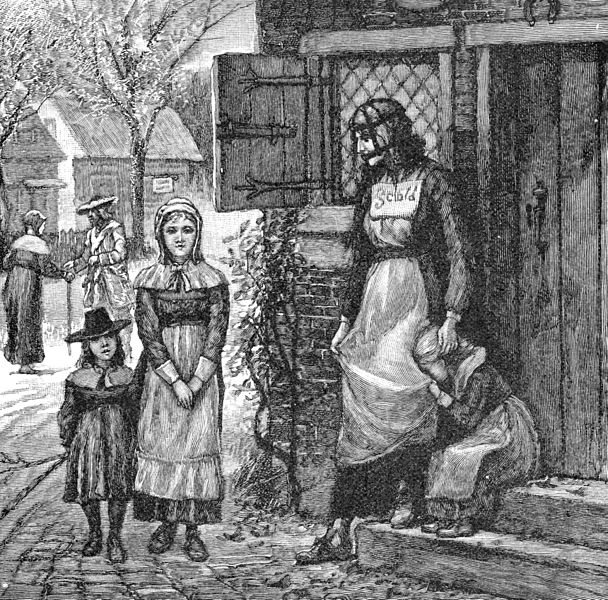
Of course I am alluding to the catastrophic warmists who fill the void left vacant by the death of that old time Puritan fundamentalism.  They, like Jonathon Edwards, believe that humanity hangs like a spider suspended by a thread in the hand of an angry god.  Once upon a time you might be sentenced to wear a scarlet letter or drowned as a witch for disrespecting the received wisdom of God's prophet.  Today too many direct questions and you are labeled a "denier."

This is not to say that eating bacon double cheese burgers everyday is good for your health or that burning dinosaur bones is without ecological consequence.  It only goes to demonstrate that complex systems, like the human body and global climate, are truly complex and attempts to simplify them lead to false conclusions.

It also demonstrates that those advocates who are the most strident, the most ready to overstate their case, should not be trusted with the power to govern our lives, or even to set the terms of public debate.  It matters little if the fundamentalism they espouse is Calvinist, Nurtitionist, Warmist; or any other human ideological classification, it all comes from the same place in the human heart.  Where there is the absence of humility there lies the seed that we must be dictated to, for our own good of course.